
Book Appointment Now
Own Your Perspective
Put yourself in their shoes and think about where they're coming from. Everyone has a story.
We’re told that seeing the other side is a good thing.
Put yourself in their shoes and think about where they’re coming from. Everyone has a story.
Most of the time this is sound advice, but empathy can work against you very quickly.
If you’ve ever walked out of a confrontation wondering how on earth you ended up as the one who had to apologise, you’ll know what I mean.
Imagine someone has hurt you, said something awful, broken their word, treated your feelings as if they didn’t matter. Your first reaction is to feel hurt, and that instinct tells you something. It means they’ve crossed a line.
Then the shoe-swapping starts, and you start to think: perhaps they were under pressure, perhaps they grew up in a household where that was the norm, perhaps I was just too sensitive, perhaps if I’d phrased it differently they wouldn’t have reacted quite so badly. Within minutes, you’ve built a full defence for the person who let you down, and you’re the one on the stand in the trial you’ve set up in your own mind.
This is the danger of empathy: you can understand someone so completely that you forget you were the one who got hurt.
The Story Turns
Some people are very good at telling a story.
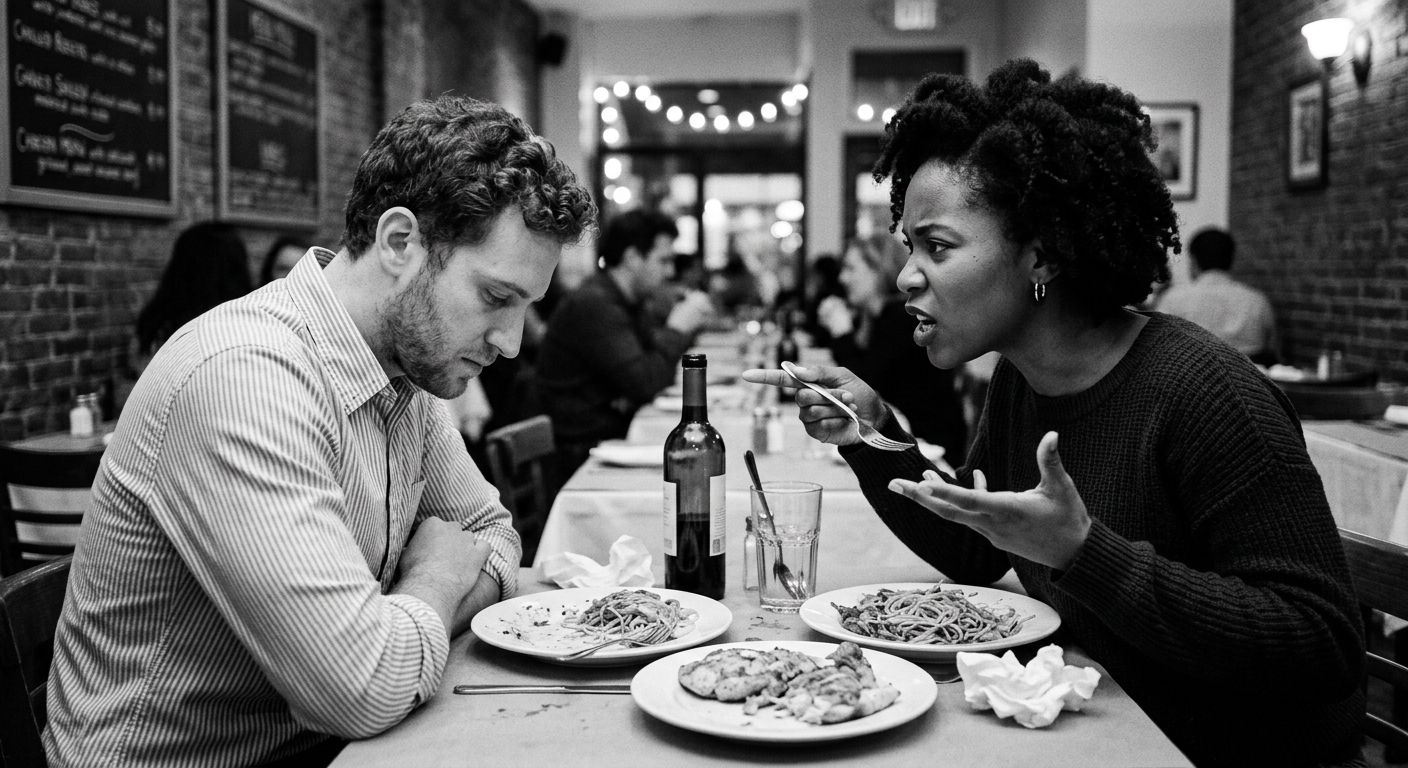
When there’s a conflict, they don’t just state their version of events; they lead with it, with conviction, in a way that immediately makes you the issue. They’ll make your response to being wronged the story and their initial action the sidebar, or they’ll erase the initial action altogether.
You raised your voice; now you’re the aggressive one.
You pulled away; now you’re cold and unforgiving.
You finally said something after months of silence, and now you’re dramatic.
And because you are empathetic, you may even agree.
You can see how it would have looked from their point of view and how your reaction would have come across as rather harsh. So you go with the new version of events you’ve constructed in your head, apologise for your response, and then try to move on and forget how it all started, and who it started with.
Excuses Are Not the Same as Understanding.
Understanding why someone did something is quite different from excusing it. Understanding is about seeing what led to the conflict. Excusing it is about convincing yourself that what the other person did is in any way valid.
A person’s painful history may explain their behaviour, but it doesn’t erase its impact on you. You can believe someone was struggling and still hold that what they did was wrong.
If you find you always have a ready-made excuse for why other people behave badly, but you never extend that same generosity to yourself, take note of that imbalance, because you’ll hate yourself in the long run.
No Two People See Same Event the Same Way.
Here is a truth that cuts both ways: two people can live through the same moment and walk away with different memories. Memory is shaped by emotion, fear, ego, and what each person needs the story to mean. Neither person is necessarily lying; they are simply seeing it from different angles.
That is exactly why your perspective matters, and why you should not hand it over just because someone else is more forceful about theirs. If you don’t hold your own account of what happened, someone else’s will fill the space with theirs and make you suffer wrongfully.
This also means that sometimes the safest thing to do is to speak only from your own experience. Don’t argue about what they really meant, don’t prove what they were thinking, and don’t litigate their details. This is what happened for me, and this is how it affected me. No one can honestly dispute that sentence, because it is yours.
Own your Perspective Around People Who Own Theirs
Some people treat their version of events like property and defend it fiercely. With people like this, a conversation about what happened is hardly about the truth. It is rather a negotiation over whose version wins. If you walk in without a firm grip on your own, you will leave with theirs, and while this may be harmless in some cases, it can cost you something important in others.
So here is what owning your perspective looks like in practice:
- Work out the sequence: remember what happened first; your reaction is a response.
- Separate the feeling from the fault. You can regret your reaction and still acknowledge what triggered it. Both can be true.
- Apologise for your own part only: take responsibility for what is truly yours. Don’t take on someone else’s blame to achieve peace. If you always let peace reign, you may never reign… you’ll probably laugh at that.
- Don’t over-explain. The more you justify your position, the less you’ll look like you have a case.
- Be very selective about who gets the full story. Don’t share your vulnerabilities with everyone. With people who will take your words and twist them, it’s definitely sensible to keep your story to yourself.
On balance
This is not an argument for becoming rigid, cold, or incapable of admitting fault. Sometimes you really are in the wrong, and the most mature thing you can do is say so. Perspective-taking remains a valuable skill, especially with people who deal with you in good faith.
Empathy should be a tool, not a substitute for self-respect. You can understand someone and still protect yourself, stepping into their shoes without losing sight of your own.
If you tend to see everyone’s side, make sure yours is included. Your hurt is real information, and your version of events deserves a seat at the table, too.
Also, when around people who are quick to rewrite the story, remember you don’t need to own your perspective because it is the only one you lived, and the one your heart knows.
ENYO DINTA
2026