Book Appointment Now
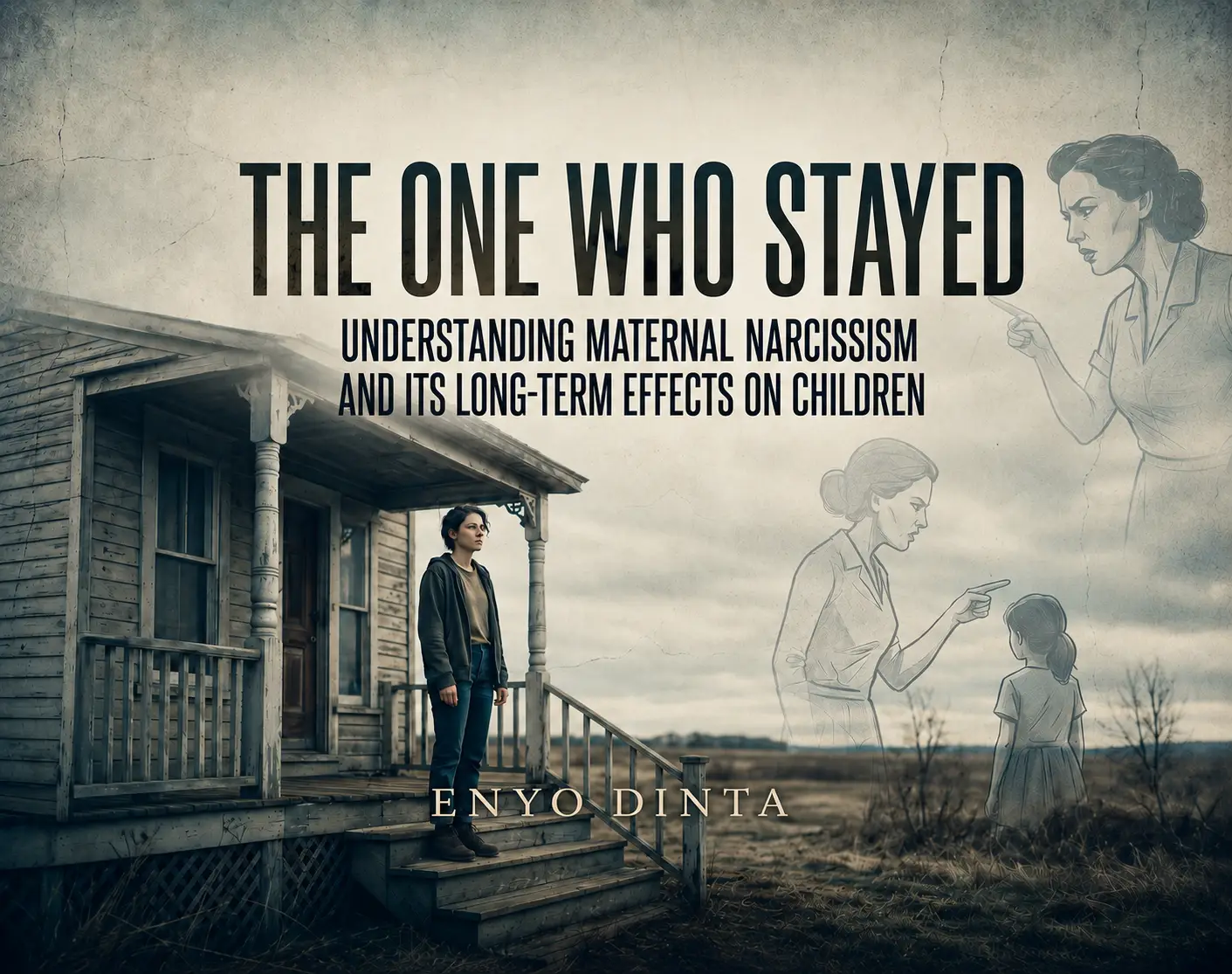
The One Who Stayed: Understanding Maternal Narcissism and Its Long-Term Effects on Children
Every child who grows up with the shadow of an absent/neglective father encounters a certain phrase early on in life. Often presented as a form of comfort, it goes something like this: “At least your mother was present.” While this statement is intended to help heal emotional wounds, it frequently ends up inflicting a different kind of hurt, one that is harder to articulate. The sentiment behind this phrase implies that the decision to remain was rooted in love, but for many of us, the reality is far more complicated and painful.
In truth, some mothers may have stayed not out of a deep bond with their children or a desire to nurture, but out of necessity. Perhaps she felt trapped, lacking viable options for a better life, or maybe she had somewhere to go but lacked the courage to leave, paralysed by fear or societal expectations. Her decision to stay often seems less about devotion to her children and more about a desperate attempt to avoid judgment from a society that looks down upon women who choose to walk away from difficult situations.
As children, we are conditioned to express gratitude for our mother’s presence, often overshadowing the complex realities that may have shaped her choices. No one thinks to teach us how to ask the deeper questions, such as: what sacrifices did she make? What inner turmoil did she endure to create an illusion of stability for us? Who truly bears the weight of that decision, and at what cost? The true answers to these questions linger beneath the surface, defining our experiences and revealing a more profound narrative about love, sacrifice, and the societal pressures that shape our lives.
The Myth of the Choice
Staying within the confines of an unhappy marriage is often depicted as an act of sacrifice, a selfless choice made for the good of others. However, this notion of sacrifice suggests an alternative path deliberately set aside for someone else’s benefit. Many mothers who choose to remain in these relationships have, in fact, already endured their own forms of sacrifice dictated not just by their personal circumstances but also by broader economic pressures, the expectations of extended family, and cultural norms that create a distinct stigma around a woman who leaves her marriage. In contrast, men who abandon their children often escape public scrutiny and remain cast as heroes, regardless of their absence.
The reality for these women is complex; their decision to stay isn’t always born of a greater capacity for love or commitment than their husbands’. Rather, it often arises from a fear of being branded the villain in a narrative carefully constructed around them. In this narrative, they are left with the unfortunate choice of either maintaining the status quo or enduring a social and personal fallout as the one responsible for disrupting the family unit.
Moreover, if leaving is not an option, these same women may seek release for their pent-up frustrations and dissatisfaction. In many cases, this manifests as an unconscious need to recreate the emotional confines of their own lives, leading them to impose similar limitations on their children. This unfortunate cycle means that the child, simply by virtue of being present and vulnerable, becomes the recipient of their mother’s unaddressed anger and despair. The child isn’t to blame for this situation; they are just a small, innocent being engulfed in the tumult of a larger emotional landscape and tragically unequipped to challenge or counter the fury directed at them. As a result, they become the unintended vessel for their mother’s frustrations, caught in a cycle of inherited pain and helplessness.
The Words That Draw No Blood but Never Stop Bleeding
It all begins with language, the potent tool that is both accessible and free; it is the foundation upon which relationships are built and sometimes, tragically, dismantled.
“You are the reason I have chosen to stay with your wicked father.” “You are the reason my life has turned out in such a challenging manner.” “If it weren’t for your existence, I would have found the strength to leave long ago.” “If it weren’t for you, perhaps I would have discovered happiness in a different life.”
A child exposed to these sentiments repeatedly does not merely feel guilt; they undergo a profound transformation in their perception of self-worth. Gradually, they begin to perceive their very existence as a ‘debt’, an obligation to repay a heavy burden that has been placed upon them. From the food they eat to every school fee paid, to the roof kept over their heads, everything becomes an item in an unending ledger. However, the currency of this transactional relationship is not love or affection, which would be a fair exchange in any nurturing bond. Instead, it is the expectation of complete, wordless obedience that fills the void: servitude and gratitude, the only form of payment and the sole obligation the child must fulfil.
This child soon learns to apologise for their very hunger, because they have realised that their needs are a source of shame rather than a natural part of human existence. They instinctively shrink in social situations, becoming smaller both physically and emotionally to take up less space and avoid being a burden. Most tragically of all, they internalise a harmful belief: they have no right to express their needs or desires to the person whose fundamental duty it is to fulfil them. This is a person who has already made it abundantly clear that meeting those needs felt like a monumental sacrifice, one that nearly derailed her own happiness and sense of self. These mothers will never stop reminding their children of everything they have done for them.
And so, the child remains tethered to this reality, confined to a space where they feel they have nowhere to turn. Leaving is not a viable option; where could they possibly go? A child stripped of every resource and safety net finds themselves trapped, lacking the leverage to break free. In their world, any attempt to seek better for themselves would be misconstrued as ingratitude, a failure to appreciate the sacrifices made on their behalf. This complex web of emotion creates an environment of silent suffering, where the wounds may not be visible but continue to bleed, leaving lasting scars on the psyche.
The Tears That Do the Abuser’s Work For Her
There exists a particular form of abuse that masquerades as vulnerability, a façade that can be profoundly disorienting for those on the receiving end. Imagine gathering all your courage after enduring pain, finally summoning the strength to ask for something as seemingly simple as an apology, a small act of acknowledgement for the harm inflicted upon you. Instead of remorse, however, you are met with tears. These tears are not expressions of regret; they are strategic, a tactic of emotional ambush employed the very moment you dare to demand accountability.
In a matter of moments, the dynamics shift dramatically. You, once the victim seeking validation and solace, find yourself transformed into the source of her distress. As she weeps, you instinctively take on the role of the caretaker, comforting the person who has caused you pain. You apologise for having the audacity to voice your feelings, promising never to approach the subject again lest you bring further hurt to her already fragile state.
As the emotional atmosphere settles, she gradually regains her composure, shifting the narrative to highlight how your needs have complicated her life. This exchange reveals one of the most insidious forms of emotional manipulation: the complete inversion of consequences. She evades confronting the impact of her actions, for she has conditioned you to shoulder the burden of her feelings. Each time you attempt to hold her accountable, it becomes a parade of your perceived cruelty in her retelling, casting you as the aggressor rather than the one who has been harmed.
Over time, this cycle of emotional manipulation wears you down. You stop voicing your needs. You haven’t forgiven her, and the hurt hasn’t magically disappeared, but you have learned the painful lesson that the price of seeking acknowledgement and resolution is invariably higher than the cost of remaining silent. In silence, you avoid the conflict but also continue to carry the weight of unresolved pain. You are trapped in a dance of emotional abuse that leaves you feeling more isolated than ever.
The Body as Property
In these moments, the line between discipline and control becomes unclear. Punishments that go beyond just correction; they create a twisted belief that a mother has the right to hurt the body, just because she birthed or nurtured it. These harsh treatments happen in many places: on busy streets where people look away, in classrooms where classmates see the shaming, in religious houses, and in front of siblings who go quiet, learning what they should avoid. The public humiliation is not just a side effect; it is the goal. It carries a weight that private shame cannot match; it teaches you that you don’t deserve respect or dignity, even among strangers.
However, the deepest betrayal is not just in the act of violence. It comes when you approach her, hurt and vulnerable, seeking comfort after being wronged by others: a teacher who disrespected you, a relative who ignored you, a stranger who hurt your innocence. Instead of providing comfort, she turns her anger on you, as if your pain is the true problem. From this, you learn a painful lesson no child should have to experience: that asking for help or sharing your pain with your own mother only leads to more suffering. You find that the safest way is to hide your wounds inside and remain silent about your hurt.
The Church Clothes
What deepens the sense of strangeness and isolation is her religion. The very same hands that once held you down with an unforgiving grip could, just an hour later, be raised high in a cacophony of worship and prayer. The same mouth that hurled words of despair at you, labelling you as useless, a mistake, or a stain in her life, could turn around and offer a warm smile and encouraging words to a neighbour’s child. This mouth, which once demonised you, became a vessel for soothing scripture about grace, patience, and the fruits of the Spirit, the very expressions of love and kindness that seemed genuine for all who witnessed them, except for you.
You come to realise, even before you are capable of articulating it, that the kindness she occasionally displayed was never truly an expression of virtue or genuine affection. Instead, it was a performance meant for an audience, and you, unfortunately, were never meant to be part of that audience. You were the witness, the only one who caught a glimpse of the darker side that emerged when no one else was watching. This positioning also meant that you became the sole individual unable to substantiate your experiences, trapped in a reality that others could hardly fathom or believe.
In your desperate quest for acceptance, you find yourself striving to embody the version of her that others seem to enjoy. You begin to take on chores before she even thinks to ask, eager to make yourself useful, even beyond your capacity. You fade into the background, trying to remain quiet and unobtrusive, convinced, at some deeper level of your being, that if you manage to become good enough and unassuming enough, she might eventually extend her warmth to you, just as she does to the strangers who invade her space.
Yet, despite your relentless efforts, this strategy seldom works. It gradually becomes clear that her treatment of you was never dependent on your behaviour or the things you did. It stemmed from a need within her, a compulsion to find a place to project all the burdens and emotions she couldn’t express anywhere else. You were not the solution to her struggles; you were simply the designated outlet for her unresolved pain.
The Eggs and the Blade
I often reflect on a specific kind of fear that you won’t find in parenting books: the scary sight of a boiled or roasted egg held near a child’s mouth, suggesting punishment for a lie that was never told. There’s also the unsettling presence of an open blade, shown to create fear of possible violence. Faced with these two harsh choices, you confess. However, this confession does not reveal the truth. Instead, it fits the story she has already made up in her mind as the “truth.”
My mother found grim satisfaction in hurting me, leaving marks on my body and mind. Even if she didn’t physically harm me, I still felt flawed because of the trauma.
She often threatened to burn my lips with hot boiled or roasted eggs whenever she thought I was lying, even when I told the truth. To avoid her anger, I often lied, but I soon realised there was no way to escape her torment. Deep down, she already decided what she wanted to hear, using her threats to scare me into submission.
Her frustration grew because I regularly preferred a severe beating over the boiling eggs or the sharp blade. She would wave an open razor blade and claim I would be cut if I didn’t confess to small things like taking a banana from the fridge or sneaking baby formula. I wasn’t the human in the house, but somehow it had to be me suffering. These accusations were usually false, but I learned to admit to things I hadn’t done. Confessing meant facing her anger, which could come from a wooden spatula, her bare hands, or anything nearby. Each of these options felt less scary than the sting of a blade over my face or the heat of an egg.
There is something deeply upsetting about these interactions: my mother never really wanted to find out the truth. She had already made up her mind. What she wanted was not the truth but my confession, my surrender, and my compliance to become what she needed me to be at that moment, guilty, so that the punishment that followed,whether it was a spatula, a slap, or whatever she could reach, could be seen by her as justice instead of the cruel reality it really was.
In such a painful environment, a child facing different types of harm will often choose to endure the one that causes the least damage. This choice is not about confessing; it’s a tough survival tactic in a chaotic situation.
We have been taught to believe that being present means showing love, as if the only real failure is the person who leaves. But a woman can stay in the house and still be absent in meaningful ways. She can stay and still blame you for her unhappiness, her marriage, her reputation, her tears, and her anger. Just staying doesn’t tell you what that person does once they decide to stay.
Children of women like this grow up carrying a strange grief, a grief for a mother who is still alive and physically present, but not really there. It is grief without a clear end because you are not supposed to mourn someone who never actually left. But you can mourn the mother she could have been and the childhood you wished for, where you could just be a child instead of a ledger, a scapegoat, a mute witness, or a body controlled by fear.
Eventually, you can stop confessing to things you didn’t do. You can stop feeling responsible for her tears. You can choose to stay, or you can choose to go, but either way, that choice is finally yours.
ENYO DINTA, Author