Book Appointment Now
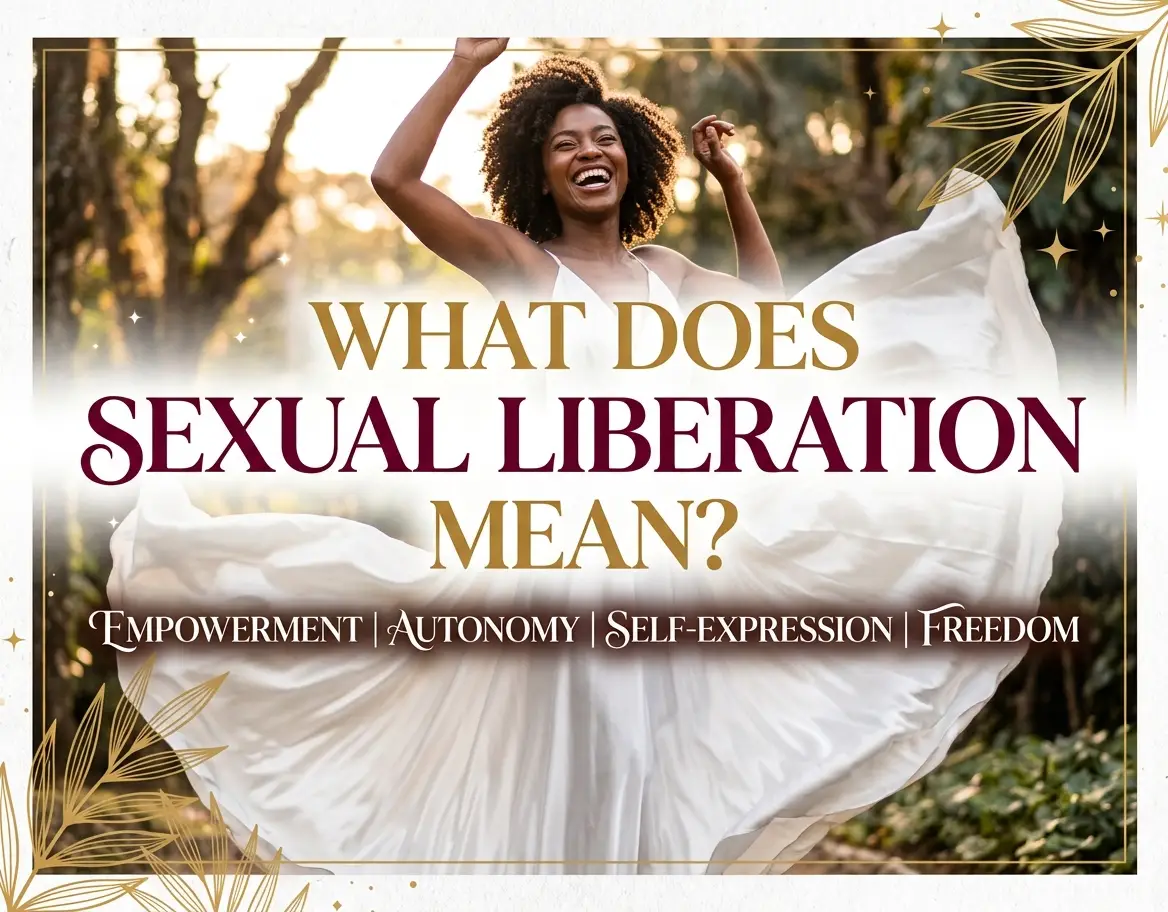
WHAT DOES SEXUAL LIBERATION MEAN?
Sexual liberation is one of those phrases that sounds self-explanatory until we ask what, exactly, a person is supposed to be liberated from. Is it religion? Marriage? Social expectations? Shame? Gender roles? The fear of being judged for desire? Or is it simply the freedom to decide what happens to one’s own body? The answer is more complicated than “being free to have sex.”
At its broadest, sexual liberation refers to the idea that people should have greater autonomy over their sexuality and should not be unnecessarily controlled, shamed, discriminated against, or coerced because of their sexual feelings, identities, relationships, or reproductive choices. Modern discussions of sexual health similarly place autonomy, consent, bodily integrity, equality, and freedom from coercion at the centre of sexual well-being.
However, sexual liberation has never meant the same thing to everyone. It has changed across cultures and historical periods, and it has produced serious debates about morality, religion, gender, marriage, contraception, sexual orientation, sexual expression, and the difference between freedom and exploitation. Michel Foucault’s influential The History of Sexuality is particularly important to this discussion because it challenged the simple idea that Western society moved from a period of sexual silence into one of sexual freedom, arguing instead that modern societies have continually produced new ways of talking about, classifying, regulating, and governing sexuality.
Understanding sexual liberation therefore requires looking beyond the popular image of it as simply “having more sex.”
WHERE DID THE IDEA OF SEXUAL LIBERATION COME FROM?
Although people have challenged sexual restrictions throughout history, the expression sexual liberation is particularly associated with social and political changes in the twentieth century.
In Europe and North America, the late nineteenth and early twentieth centuries saw growing challenges to established ideas about sexuality, marriage, gender, and morality. Reformers, feminists, physicians, writers, and political thinkers increasingly questioned whether sexuality should be governed primarily through traditional religious and social institutions.
The movement became particularly visible during what is commonly called the sexual revolution of the 1960s and 1970s.
Several developments contributed to this transformation. Greater availability of contraception, particularly the oral contraceptive pill after its introduction in the United States in 1960, helped separate sexual activity from pregnancy for many people. Feminist movements challenged traditional expectations surrounding women’s sexuality, marriage, motherhood, and economic dependence, while gay-rights movements challenged the criminalisation and social condemnation of same-sex relationships.
The development and wider availability of modern contraception were particularly significant because control over reproduction could affect women’s education, employment, family planning, and economic independence
The social changes of the period were therefore not simply about encouraging sexual activity. They were also about challenging who had authority over sexuality and reproduction.
SEXUAL LIBERATION IS ABOUT AUTONOMY
At the centre of contemporary discussions about sexual liberation is autonomy.
Autonomy means having the ability to make informed decisions about one’s own body and intimate life without coercion. That includes the ability to say yes. It also includes the ability to say no.
This distinction is important because a society can appear sexually permissive while individuals within it remain profoundly unfree.
A person who feels pressured to participate in sexual activity to maintain a relationship is not exercising genuine sexual autonomy. Neither is someone who cannot safely refuse because of threats, manipulation, violence, or a significant power imbalance.
The WHO identifies freedom from coercion, discrimination, and violence as important elements of sexual health and sexual rights.
Sexual liberation therefore cannot simply mean removing restrictions. Freedom requires meaningful choice.
This is one reason consent is central to modern understandings of sexual ethics. Consent involves voluntary agreement and must not be obtained through coercion; importantly, agreement can also be withdrawn. Sexual-health organisations and educational frameworks consequently treat communication, boundaries, and respect for consent as central elements of healthy sexual relationships.
For young people in particular, questions surrounding sexuality also have to account for age, development, safeguarding, power differences, and legal protections. Sexual autonomy is not the same thing as having no boundaries or protections.
LIBERATION FROM SEXUAL SHAME
Another important part of sexual liberation is the rejection of unnecessary shame.
Many societies have historically attached moral value to sexual behaviour, sometimes treating certain desires as evidence that a person is dirty, immoral, weak, impure, or unworthy.
Women have often experienced this especially strongly. Traditional sexual double standards have frequently permitted men greater sexual freedom while demanding sexual restraint, purity, or modesty from women. Feminist writers and movements of the twentieth century challenged the idea that women’s identities should be organised around sexual purity, marriage, and motherhood.
This produces an interesting contradiction.
A woman may be criticised for having sexual desire, yet simultaneously be judged according to how desirable she appears. A man may be praised for sexual experience that would lead to condemnation if the same behaviour were associated with a woman.
Feminist movements have challenged these double standards by arguing that women should not be defined by sexual purity or controlled through shame. However, rejecting shame does not mean rejecting responsibility.
A person can believe that sexuality is morally significant while also believing that people should not be humiliated, abused, or discriminated against because they experience sexual desire.
SEXUAL LIBERATION AND WOMEN’S RIGHTS
The history of sexual liberation is closely connected to the history of women’s rights.
For centuries, women’s sexuality has often been regulated through laws, customs, religious institutions, family structures, and economic dependence. Feminist scholarship has therefore frequently treated control over sexuality and reproduction as questions of power rather than merely private morality.
Access to contraception changed this equation.
When people can better control whether and when they become pregnant, sexual relationships do not have to carry the same unavoidable reproductive consequences; this has important implications for education, employment, family planning, and economic independence.
This is why reproductive rights are frequently discussed alongside sexual liberation.
However, they should not be collapsed into the same concept. Sexual liberation concerns autonomy and sexual expression broadly; reproductive rights specifically concern decisions and access relating to reproduction.
IS SEXUAL LIBERATION THE SAME AS PROMISCUITY?
No.
This is perhaps one of the most common misunderstandings of the term.
Sexual liberation does not require a person to have multiple sexual partners, casual sex, or any particular amount of sexual activity. Someone can believe strongly in sexual autonomy and choose to have no sexual relationships.
Someone can hold conservative personal beliefs about sexuality and still believe that other people deserve consent, privacy, and bodily autonomy.
Someone can also have many sexual relationships while holding deeply restrictive beliefs about other people’s sexuality.
The crucial question is therefore not simply:
“How much sex does this person have?”
A better question is:
“Does this person have meaningful freedom to make informed choices about their sexuality without coercion, violence, discrimination, or unnecessary shame?”
Sexual liberation is about freedom of choice, not a required lifestyle.
This distinction is consistent with broader sexual-health frameworks, which focus on well-being, autonomy, consent, safety, and freedom from coercion rather than prescribing a particular level of sexual activity
FREEDOM DOES NOT MEAN FREEDOM FROM CONSEQUENCES
Another misconception is that sexual liberation means sexuality should have no consequences.
It does not.
Sexual decisions can have emotional, physical, social, and reproductive consequences. Responsible sexual freedom therefore involves understanding those consequences rather than pretending they do not exist.
This is where sexual education becomes important.
People need accurate, age-appropriate information about consent, contraception, sexually transmitted infections, healthy relationships, boundaries, and reproductive health in order to make informed decisions.
Without knowledge, “freedom” can become an illusion. A person cannot make a genuinely informed decision about something they do not understand.
THE COMPLICATED RELATIONSHIP BETWEEN LIBERATION AND CONSUMER CULTURE
Modern sexual culture has also introduced a difficult question: what happens when liberation becomes a product?
Sexuality is now heavily represented in advertising, entertainment, social media, fashion, music, and popular culture. Sexual expression can be presented as a symbol of confidence, modernity, attractiveness, or independence.
However, commercialising sexuality does not automatically make people more sexually free.
A person can be pressured into conforming to sexual expectations even in a society that describes itself as liberated.
Instead of being told, “You must not have sex,” someone may now be told, “You should be sexually experienced.”
Both messages can become restrictive if they leave no room for individual choice. This creates an important distinction between sexual freedom and sexual performance.
Freedom means having the right to choose. Performance means feeling that you must behave in a particular way to prove that you are liberated. The second can become another form of social pressure.
CAN RELIGION AND SEXUAL LIBERATION COEXIST?
This is one of the most complicated questions surrounding the subject. Sexual liberation is sometimes presented as inherently opposed to religion, particularly because many religious traditions place moral boundaries around sexuality.
However, the relationship is more complicated. A person may hold religious beliefs about sexuality while also believing that other people deserve bodily autonomy, dignity, safety, and freedom from coercion.
Likewise, religious people may interpret sexual morality in very different ways. For some, sexual ethics are primarily about abstinence or sex within marriage. For others, the emphasis may be on love, responsibility, fidelity, dignity, and mutual respect.
The key distinction is between holding a moral belief and using coercion to impose it on another person.
Sexual liberation does not necessarily require everyone to abandon sexual morality. It challenges the assumption that one person’s moral framework should automatically determine another person’s private choices, particularly where those choices do not involve coercion or harm.
SO, WHAT DOES SEXUAL LIBERATION REALLY MEAN?
Sexual liberation is not simply the freedom to have sex.
It is the broader struggle to give people greater authority over their own bodies, desires, relationships, identities, and reproductive decisions while protecting them from coercion, violence, discrimination, and unnecessary shame.
It also recognises that freedom and responsibility are not opposites.
A sexually liberated society should not merely ask whether people are allowed to express sexuality. It should ask whether people are safe enough to refuse it, informed enough to make decisions, respected enough to establish boundaries, and free enough to live according to their own values.
Perhaps the most useful definition is therefore this: Sexual liberation is not the freedom to do everything. It is the freedom to make meaningful choices about sexuality without being controlled, coerced, degraded, or punished simply for having a body, a desire, a boundary, or a choice of one’s own.
Moreover, that makes sexual liberation a much larger conversation than sex itself. It becomes a conversation about power, dignity, consent, equality, responsibility, and who gets to decide what happens to a person’s body.
Enyo Dinta, 2026